Money market funds in Kenya: how they work, what they pay, and what to check before you invest
Money market funds have become a favourite savings tool for young Kenyans, with yields of around 9% a year before tax. Here is how they work, what returns looked like in 2026, and the questions to ask before you put your money in.
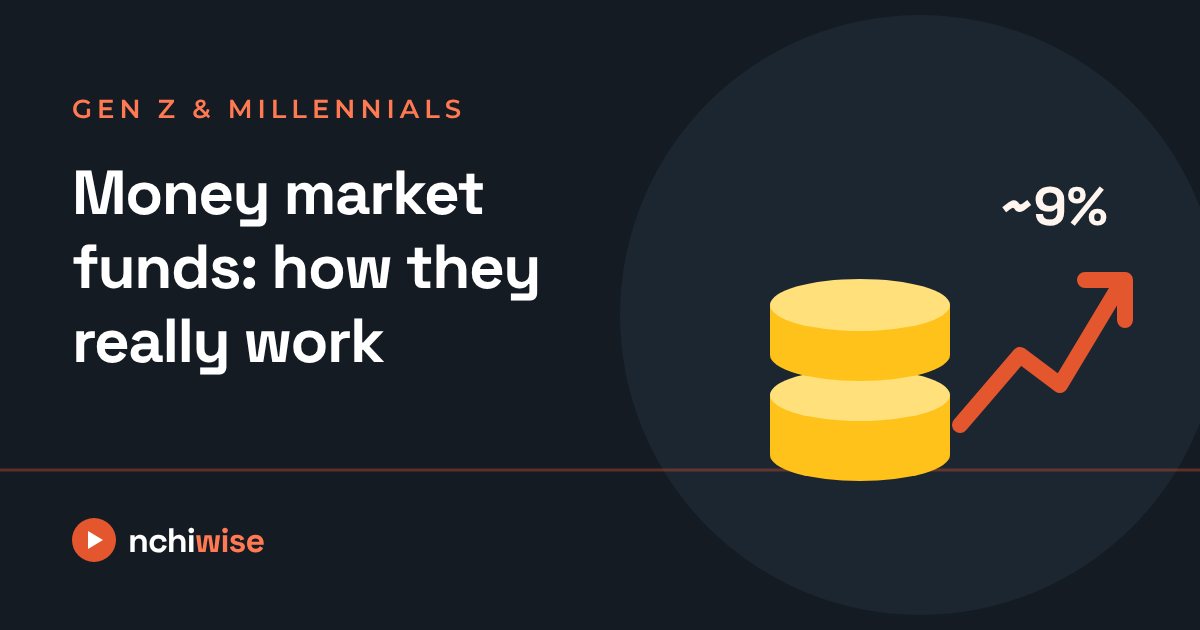
Money market funds (MMFs) are one of the most searched money topics among young Kenyans. You can start with small amounts, often through your phone, and earn more than a typical bank savings account.
What a money market fund is
An MMF pools money from many savers and invests it in short-term, low-risk assets such as Treasury bills, bank fixed deposits and short-term company debt. Returns are calculated daily and you can usually withdraw within a few days. In Kenya, MMFs are licensed and supervised by the Capital Markets Authority (CMA).
What they paid in 2026
A review of 27 CMA-licensed shilling MMFs, using data from 8 June 2026, found:
| Measure | Figure |
|---|---|
| Average gross yield | 9.11% a year |
| Middle (median) fund | 9.30% |
| Range | 5.07% to 12.77% |
| Highest in that snapshot | Nabo MMF, 12.77% gross (10.85% after tax) |
| Safaricom's Ziidi | 6.98% gross (5.93% after tax), with a 2% management fee |
Yields change every week, so treat these as a guide to the range, not today's rates.
Gross vs net: the 15% tax
Advertised rates are usually gross. Interest from MMFs carries a 15% withholding tax, so a 10% gross yield is about 8.5% after tax. Management fees are often already reflected in the quoted yield, but check each fund's terms.
Five questions before you invest
- Is it CMA-licensed? Check the CMA's list of approved collective investment schemes.
- Gross or net? Compare funds on the same basis.
- How fast can I withdraw? Most take one to three working days.
- Why is this fund paying much more? Very high introductory rates sometimes fall once a fund grows. Higher returns can also mean riskier investments.
- What are the fees? Ask for the management fee and any withdrawal charges.
Trends to watch
- Analysts expect yields to drift towards 8–10% as Treasury bill rates and competition change. If the Central Bank cuts rates, MMF yields usually fall too (see CBK holds 8.75%).
- Some savers are moving to "special" fixed-income funds that promise higher yields. These can carry more risk, so read the terms carefully.
This explainer is general information, not financial advice.